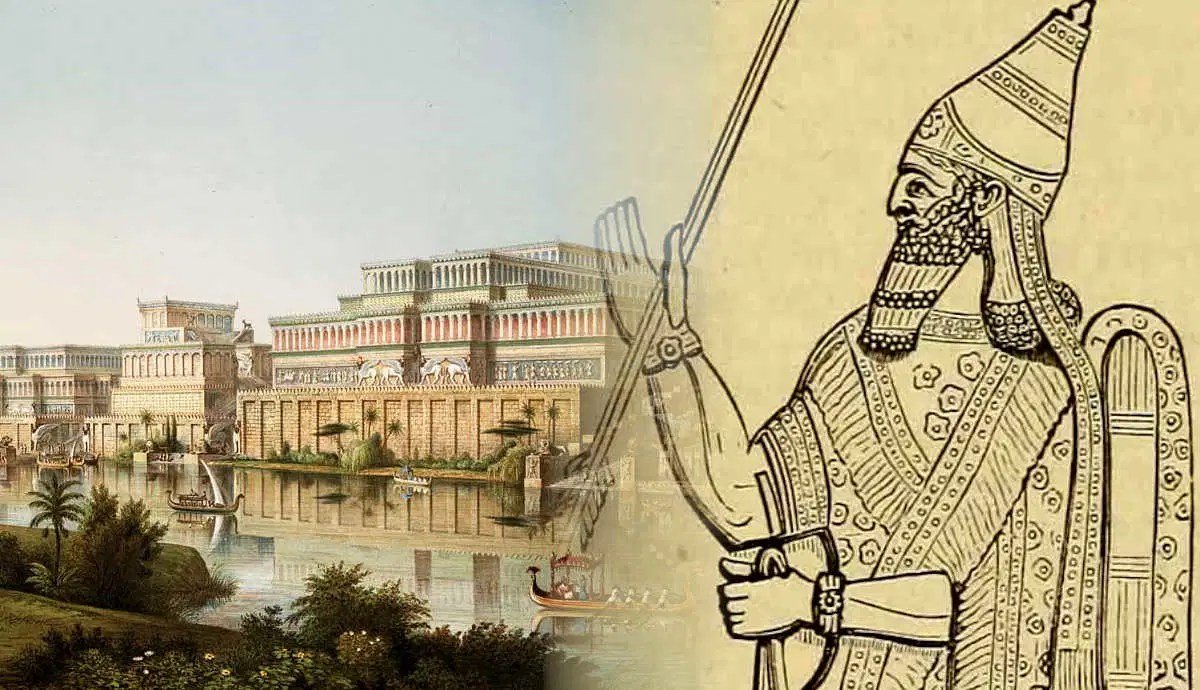
From the dusty plains of northern Mesopotamia, along the life-giving Tigris River, emerged a force that would etch its name into the annals of history: the Assyrian Empire. What drove this empire to unparalleled expansion and centuries of regional control, dominating the ancient Near East from the 10th to the 7th century BCE? The answer lies in the formidable Assyrian Empire and Military Might—a meticulously organized, ruthlessly efficient, and constantly innovating war machine that forever changed the art of warfare.
The Assyrians didn't merely fight; they perfected warfare, transforming it into a science and an art of statecraft. Their legacy is one of strategic brilliance, technological adoption, and psychological dominance that allowed them to forge an empire spanning from Egypt to the Persian Gulf.
At a Glance: The Assyrian War Machine
- Pioneers of Professionalism: The Assyrians created the ancient world's first truly professional, standing army, enabling rapid, year-round campaigns.
- Technological Innovators: They were early adopters and masters of iron weaponry and armor, giving them a significant edge over bronze-equipped foes.
- Siege Warfare Experts: Renowned for their advanced siegecraft, utilizing battering rams, movable towers, and sappers to dismantle fortified cities.
- Combined Arms Tactics: Masterfully integrated infantry, cavalry, and chariots in sophisticated battlefield maneuvers.
- Grand Strategy of Terror: Deliberately used extreme brutality and mass deportations to deter rebellion and enforce loyalty.
- Logistical Prowess: Developed sophisticated supply lines, depots, and transport systems to support vast armies far from home.
- Enduring Legacy: Their military innovations influenced later empires, including the Persians, Greeks, and Romans.
A Legacy Forged in Necessity: The Rise of Assyrian Power
The Assyrian people, settled in what is now northern Iraq, found themselves in a precarious position, frequently threatened by neighboring powers. This constant need for defense wasn't a weakness; it was the crucible in which their military genius was forged. Beginning around 1950 BCE with the Old Empire, their journey saw periods of rise and decline, notably after the powerful reign of Shamshi-Adad I.
The Middle Empire (c. 1500-900 BCE) marked a significant resurgence. Kings like Ashur-uballit I pushed back the encroaching Mitanni, laying the groundwork for future expansion. Though brief, Tiglath-pileser I (1115-1077 BCE) even expanded the empire all the way to the Mediterranean Sea, demonstrating early Assyrian ambitions. However, it was during the Late Empire (c. 900-600 BCE) that the true might of Assyria fully bloomed. This period saw relentless expansion, turning Assyria into the dominant superpower of its time.
Kings like Ashurnasirpal II, who moved the capital to Calah, and Tiglath-pileser III, who reformed the army and conquered Babylon, were architects of this dominance. Later, Shalmaneser III fought major battles like Karkar (853 BCE) and exacted tribute from key city-states, while Sargon II and Sennacherib expanded the empire's reach further. The empire reached its greatest extent under Ashurbanipal, who completed the conquest of Egypt and subdued the Elamites in 639 BCE. This remarkable expansion wouldn't have been possible without an equally remarkable military.
The Unrivaled Structure of the Assyrian Army
Imagine an ancient military force that could mobilize tens of thousands of highly trained soldiers at a moment's notice, ready for year-round campaigns. That was the Assyrian army. Unlike earlier armies that relied on seasonal levies of farmers, the Assyrians developed a professional, standing army—a truly revolutionary concept for its time.
At its core, this was a highly organized machine. Command structures were clear, often led by the king himself or by senior field marshals known as turtans. Ranks designated control over specific units, typically 1,000, 500, or 100 troops, ensuring efficient control on the battlefield. The army also notably integrated various ethnic units, often on a basis of equality, showcasing a pragmatic approach to leveraging all available strength. This sophisticated organization allowed for rapid deployment and sustained operations, setting a new standard for military logistics and professionalism.
The Arsenal of Dominance: Components and Weaponry
The Assyrian military wasn't just well-organized; it was equipped with cutting-edge technology and optimized for combined-arms warfare. Each branch played a distinct role, contributing to a synergy that few ancient adversaries could match.
Chariot Corps: From Speed to Shock
Initially, the chariot was the undisputed king of the battlefield, serving as the core of Assyrian offensive power. Early chariots were lightweight, two-man vehicles used for reconnaissance and swift combat. But over time, they evolved into heavier, four-horse, four-man behemoths. These later models were primarily used as mobile firing platforms for archers, delivering devastating volleys, or as shock vehicles to break enemy lines. Effective on flat, open terrain, they were a powerful symbol of Assyrian military might.
The Rise of Cavalry: Masters of Maneuver
While chariots held sway for centuries, a new force emerged in the 9th century BCE: cavalry. Initially, these riders operated in pairs, one controlling the horses while the other fired a bow. This early arrangement limited their tactical flexibility. However, by the 7th century BCE, the Assyrians had perfected independent cavalry units. These autonomous forces, armed with bows, lances, and swords, largely displaced chariots as the primary mobile strike force. Cavalrymen wore lamellar armor—overlapping plates of metal or hardened leather—and even their mounts were often protected by fabric armor, a testament to Assyrian dedication to soldier protection.
The Infantry: The Unyielding Backbone
The infantry was, and remained, the backbone of the Assyrian army. It was a diverse force, meticulously structured for various roles:
- Heavy Infantry: These soldiers formed the core of the assault. Equipped with large shields and long spears, they were designed for close-order combat, creating an impenetrable wall of iron and muscle.
- Lighter Infantry: Comprising archers and slingers, these units provided ranged support, softening enemy lines before the heavy infantry engaged.
- Archers and Shieldbearers: Assyrian archers were particularly effective, often deployed in pairs with a dedicated shieldbearer who protected them while they unleashed volleys of arrows with ranges up to 650 meters.
- Weaponry: Beyond bows and slings, the Assyrians wielded a variety of deadly close-combat weapons including lances, daggers, and swords. Tiglath-pileser III introduced the "lance-spear" for close-order thrusting, and lamellar armor, known as zuku sa sheppe, became standard for elite infantry units, enhancing their survivability and psychological impact.
Innovations in Warfare: The Assyrian Blueprint
The Assyrians didn't just inherit military practices; they innovated them, setting precedents that would echo through the military history of empires like Rome.
Iron Age Advantage: Technology at War
The Assyrians were early and enthusiastic adopters of iron technology. While many adversaries still relied on bronze, the Assyrians utilized iron for their weapons and armor. Iron, being harder and capable of holding a sharper edge, provided a significant technological edge, giving their soldiers a distinct advantage in combat. This embrace of cutting-edge metallurgy was a cornerstone of their success.
Masters of Siegecraft: Breaking Down Walls
Fortified cities were no match for the Assyrians. They were arguably the greatest siege engineers of the ancient world. Their arsenal included:
- Movable Wooden Towers: Covered by dampened leather to resist incendiary attacks, these towers allowed archers to fire down into besieged cities and provided a platform for assaulting walls.
- Battering Rams: Employing both swinging rams and specialized iron-bladed rams designed to pry apart individual stones, they systematically dismantled city defenses.
- Sappers: These highly skilled engineers dug tunnels beneath city walls, undermining foundations and causing sections to collapse. This mastery of siege warfare meant that few cities could withstand a determined Assyrian assault, a fact grimly depicted in reliefs like the siege of Lachish in 701 BCE.
The Logistics of Empire: Fueling the War Machine
An army is only as good as its ability to move and sustain itself. The Assyrians understood this implicitly. They developed an incredibly sophisticated logistical system that allowed their armies to operate effectively hundreds of miles from their homeland.
- Supply Depots: Strategically placed along key routes, these depots ensured a steady flow of provisions.
- Transport Columns: Organized convoys moved food, water, and equipment.
- Bridging Trains: Mobile engineering units could rapidly construct pontoon bridges, allowing armies to cross rivers and ravines, maintaining momentum.
- Marshaling Cities: Key cities were maintained with ready provisions to quickly equip and supply large armies before they set out on campaign. This logistical prowess allowed for rapid advances and sustained campaigns up to 300 miles from base, a remarkable feat for ancient armies. To learn more about the region that fostered such innovations, you might want to explore the history of Mesopotamia, the land between the Tigris and Euphrates.
Battlefield Tactics: A Symphony of Destruction
Assyrian battlefield tactics were a testament to their combined arms approach. They didn't simply throw troops at an enemy; they executed carefully planned maneuvers:
- Initial Engagement: Skirmishers, archers, and slingers would open engagements, unleashing a barrage of projectiles to demoralize and disrupt enemy formations.
- Frontal Assault: Following this initial barrage, heavy infantry would advance in tight formations, engaging the enemy head-on.
- Decisive Thrusts: As the infantry engaged, cavalry and chariots would exploit weak points, delivering devastating thrusts from the flanks or directly through the center, often leading to a rout.
Tiglath-pileser III's Reforms: A New Era of Professionalism
King Tiglath-pileser III (745-727 BCE) is often credited with some of the most profound military reforms, creating what many historians consider one of the most efficient armies of the ancient world before Rome. He moved away from seasonal conscription of agricultural workers, who had to return to their farms, and instead instituted a professional, standing army. This force, augmented by provincial contingents and levies from conquered peoples, provided a constant readiness for war, allowing for year-round campaigns and continuous expansion. He also established a personal bodyguard, an elite core of the army.
Grand Strategy and Psychological Warfare: The Shadow of Ashur
Assyria's military might wasn't just about winning battles; it was about securing an empire. Their grand strategy was overwhelmingly offensive, aiming to expand and secure adu—"pacts of loyalty" which usually meant tribute and submission. And if an enemy resisted, the Assyrians employed psychological warfare with ruthless efficiency.
Terror was a deliberate tactic. When cities rebelled or refused tribute, the consequences were horrific: entire populations massacred, lands laid waste (granaries burned, irrigation systems destroyed, orchards cut down). The most infamous tactic was mass deportation. Tiglath-pileser III, for example, deported 65,000 people from Iran in 744 BCE and resettled 30,000 Syrians in the Zagros Mountains. This policy served multiple purposes: it removed rebellious populations, broke local identities, and provided labor for Assyrian projects, all while sending an unmistakable message to any potential rebels: resistance was futile and catastrophic.
For those who submitted, the terms were different. Tributary states retained some autonomy, while annexed territories with imported populations were forced to worship Ashur (the Assyrian national god) and were assimilated, treated as Assyrians. Fortresses were strategically built in annexed territories, not just to control trade routes but also to serve as bases for future tribute raids, ensuring continued submission.
The Iron Empire's Twilight: Decline and Fall
Despite their unparalleled military prowess, even the mighty Assyrians could not last forever. The very policies that fueled their expansion eventually sowed the seeds of their destruction. Overextension stretched their military and administrative resources thin. Constant warfare, while initially profitable, drained manpower and wealth. The brutal treatment of subject peoples bred deep resentment, fostering a desire for revenge among those they oppressed.
Internal strife and dynastic struggles further weakened the empire from within. By the late 7th century BCE, a formidable coalition emerged: the Babylonians, Medes, and Scythians. In 612 BCE, this combined force attacked and captured Nineveh, the proud capital of Assyria, dealing a fatal blow. The empire rapidly unraveled, its cities systematically dismantled, bringing an end to Assyrian dominance and marking a dramatic shift in the geopolitical landscape of the ancient Near East.
An Enduring Echo: The Assyrian Military's Legacy
Though the Assyrian Empire vanished from the political map, its military legacy resonated for centuries. The innovations developed and perfected by the Assyrians fundamentally changed how warfare was conducted. Their creation of a professional, standing army, their sophisticated siegecraft, the effective integration of different military branches, and their calculated use of terror set precedents that influenced every major military power that followed.
From the organized legions of the Romans to the strategic campaigns of the Persians and Greeks, elements of Assyrian military thought and practice can be seen. Their annals, inscribed carvings, and stunning palace reliefs (many now housed in museums like the British Museum, offering vivid depictions of their campaigns) continue to provide invaluable insights into their military genius. Even ancient texts like the Old Testament and Greek accounts by writers such as Herodotus offer glimpses into the awe and fear inspired by the Assyrian war machine.
The Assyrian Empire's military might was more than just a tool for conquest; it was a defining characteristic that allowed them to shape a significant chapter of ancient history. They didn't just win wars; they defined how wars were fought, leaving an indelible mark on military strategy and organization for millennia to come.