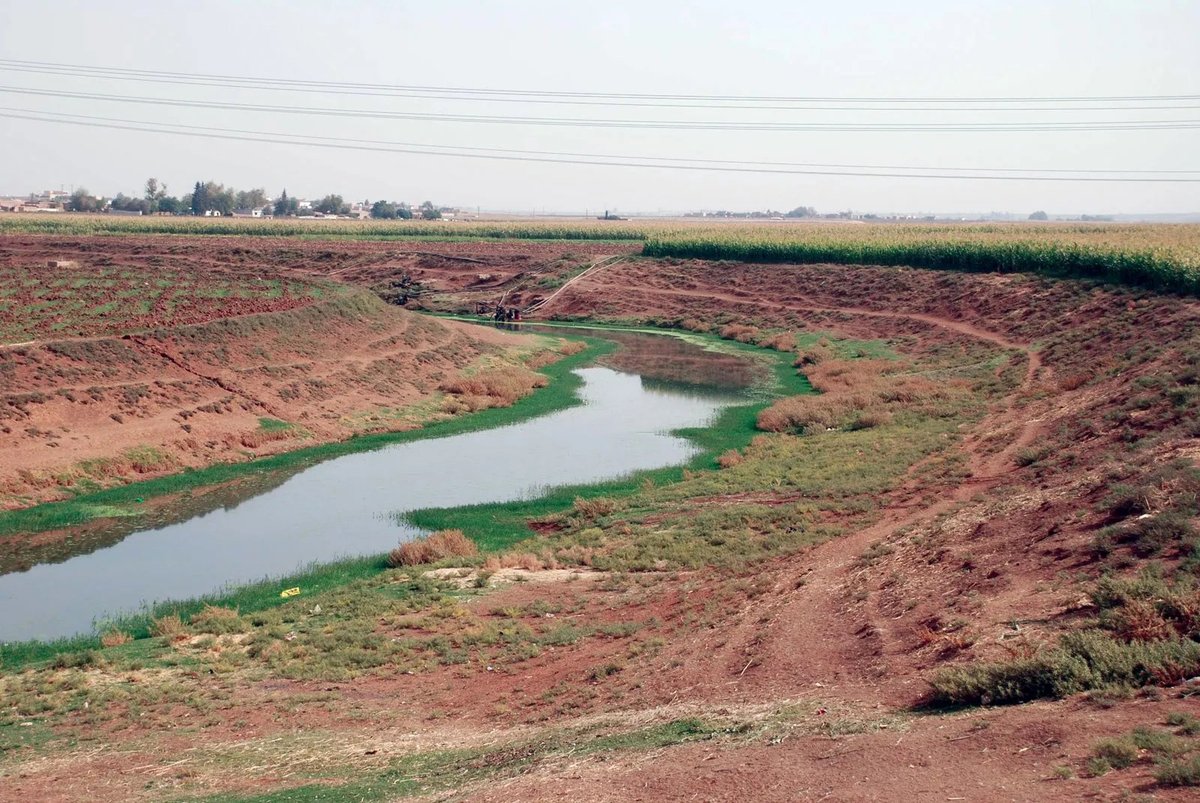
Geography of the Tigris and Euphrates Defined Mesopotamia's Strategic Importance
Few natural features have sculpted human history quite like the Geography of the Tigris and Euphrates. These two legendary rivers, carving a fertile crescent through what is largely arid landscape, didn't just nourish civilizations; they dictated their rise, fall, and geopolitical struggles for millennia. From the dawn of cities to the clashes of empires and the resource politics of today, understanding this ancient river system is key to grasping the very foundations of human civilization.
Imagine a land where two mighty rivers converge, creating an oasis in the desert – a veritable magnet for life, trade, and power. This isn't just a picturesque thought; it's the enduring reality of Mesopotamia, the "land between the rivers," whose strategic significance was eternally defined by the Tigris and Euphrates.
At a Glance: The Rivers That Shaped the World
- Origins: Both rivers begin their long journeys in the mountainous regions of Eastern Turkey (Taurus Mountains for the Tigris, Armenian Highlands for the Euphrates).
- Flow: They generally flow southeastward through Syria and Iraq before converging.
- Mesopotamia: The fertile plain between these two rivers, known as Mesopotamia, became the "Cradle of Civilization."
- Convergence: They meet to form the Shatt al-Arab waterway, emptying into the Persian Gulf.
- Lifelines: Provided essential water for agriculture, enabling the growth of complex societies and massive irrigation systems.
- Strategic Hub: Their location created a natural crossroads for trade, culture, and relentless geopolitical conflict.
- Modern Relevance: Still vital lifelines for Iraq and Syria, subject to modern resource competition and environmental challenges.
The Lifelines of Civilization: A Geographic Overview
The Tigris and Euphrates rivers are more than just waterways; they are the fundamental arteries of the Fertile Crescent, a region often called the "Cradle of Civilization." Their story begins high in the mountainous plateaus of what is now eastern Turkey.
The Euphrates River, the longer of the two, originates in the Armenian Highlands of eastern Turkey. From there, it embarks on a remarkable journey of approximately 2,800 kilometers (1,740 miles), flowing southward through Syria and Iraq. Its course is often broad and somewhat slower than its counterpart, making its banks ideal for extensive irrigation systems that fueled ancient agricultural innovations.
Slightly to the east, the Tigris River springs from the Taurus Mountains, also in eastern Turkey. Though shorter at roughly 1,850 kilometers (1,150 miles), the Tigris is known for its swifter current. It flows predominantly southeastward through Iraq, becoming a more challenging river for ancient navigation but a powerful source of water and, eventually, hydroelectric power in modern times.
As these two majestic rivers diverge and then converge downstream, they enclose a vast, incredibly fertile plain—the very definition of Mesopotamia. This region, literally translating to "the land between the rivers," provided the life-sustaining water needed to transform desert landscapes into agricultural powerhouses. Finally, approximately 500 kilometers downstream from where they first nurtured the earliest cities, the Tigris and Euphrates join forces to form the Shatt al-Arab waterway, which ultimately spills into the Persian Gulf. This entire system, from source to sea, laid the foundation for an unprecedented flourishing of human culture, trade, and imperial ambition.
The Fertile Crescent's Heartbeat: Sustaining Ancient Empires
It's hard to overstate the importance of these rivers to early human development. Without the Tigris and Euphrates, the vast stretches of land through which they flow would remain largely inhospitable deserts. Instead, their annual floods deposited rich silt, replenishing the soil and making intensive agriculture possible. This consistent water supply allowed early communities to transition from nomadic hunter-gatherer lifestyles to settled agricultural societies, leading to a surplus of food.
This agricultural revolution, driven by ingenious canal systems and irrigation techniques mastered by early Mesopotamians, led directly to larger populations. Small villages blossomed into complex cities, fostering specialized labor, administrative structures, and eventually, powerful empires.
Along the banks of these rivers, some of humanity's earliest and most influential civilizations took root:
- Sumer: Home to the world's first cities and writing system, built on the agricultural bounty of the lower Mesopotamia.
- The Akkadian Empire: The first empire in history, uniting Sumerian city-states under a single rule.
- Assyria: A formidable military power, dominating much of the Near East from its heartland along the Tigris.
- Babylonia: Renowned for its magnificent cities, legal codes, and scientific advancements, particularly centered around the Euphrates.
The rivers also served as natural highways for trade and communication. Boats laden with goods traversed their waters, connecting disparate communities and linking Mesopotamia to the wider ancient world. Cities like the legendary Babylon, Seleucia, and Ctesiphon rose as centers of power and commerce, eventually succeeded by the grand Islamic capital of Baghdad, all strategically positioned along these vital waterways.
Other significant ancient and modern cities that owe their existence to these rivers include Diyarbakır and Mosul in Turkey, and Basra in Iraq along the Tigris. Along the Euphrates, cities like Raqqa and Deir ez-Zor in Syria, and Hit and Nasiriyah in Iraq thrived as vital hubs. The sheer density of historical and modern urban centers hugging the riverbanks speaks volumes about their indispensable role in supporting continuous human settlement and development.
Geopolitics of a Crossroads: Mesopotamia's Strategic Value
Beyond their life-giving waters, the geography of the Tigris and Euphrates instilled in Mesopotamia an undeniable geopolitical significance. The region's position, nestled between continents and empires, made it a perpetual crossroads for trade, culture, and, inevitably, conflict. It was a prize coveted by every major power of the ancient world.
As ancientwarhistory.com highlights, the rivers' convergence into the Persian Gulf created a natural nexus, making Mesopotamia the heartland of successive civilizations. This strategic location was particularly pronounced in its northern region, which consistently became a battleground for imperial ambitions.
Rome vs. Persia: The Enduring Struggle
For centuries, northern Mesopotamia represented a critical frontier in the titanic struggle between two of the ancient world's most formidable powers: Rome and Persia. From the Parthian Kingdom to the Sassanian Empire, control of this territory wasn't merely about territorial expansion for Rome; it was about securing a crucial buffer against aggressive Persian advances.
The Armenian Kingdom, a Roman ally culturally aligned with the East, often found itself caught in the middle. If Persia controlled northern Mesopotamia, Armenia—and by extension, Rome’s entire eastern defensive posture—would be dangerously exposed. Emperors like Marcus Aurelius and Septimius Severus launched extensive campaigns specifically to secure this region, understanding its pivotal role in maintaining Roman stability and projecting power.
Initially, under emperors like Hadrian, the Euphrates often served as a relatively stable border. However, by the 3rd century AD, as Roman military dominance began to wane, control of northern Mesopotamia became less about expansion and more about sheer survival. The river that once delineated a frontier transformed into a fiercely contested battleground.
A Glimpse into Ancient Warfare: The Campaign of 243 AD
To truly grasp the strategic importance of this geography, consider the dramatic events of 243 AD, as detailed by ancientwarhistory.com. This year saw Roman Emperor Gordian III, advised by his praetorian prefect Timesitheus, launch an audacious campaign across the Euphrates. Their objective: reclaim northern Mesopotamia and then march on Ctesiphon, the formidable Persian capital.
Initially, the campaign surged with success. Roman legions, bolstered by battle-hardened veterans from the Danube and local allies, recaptured key cities like Edessa and Carrhae with relative ease. Greek-speaking populations, weary of Persian rule, often welcomed the Roman forces, and the Persian army found itself in retreat.
Yet, as is often the case in geopolitics, fortunes can turn swiftly. Disaster struck when Timesitheus, the brilliant strategist behind the Roman advance, died suddenly—likely from exhaustion amidst the rigors of campaigning. His death left the young Emperor Gordian III, barely 19, without his crucial mentor. Supply lines, already stretched thin across vast distances and hostile terrain, collapsed. Morale among the troops plummeted, exacerbated by the harsh winter conditions and a growing resentment towards the emperor's perceived luxuries contrasted with their hardships.
In February 244, the campaign culminated in tragedy. Gordian III was assassinated, allegedly by soldiers bribed by his successor, the Praetorian prefect Philip. Philip quickly declared himself emperor. The Senate in Rome, faced with a fait accompli, deified Gordian but couldn't ignore the army's deep grief. Legionaries built a monumental tomb near the Euphrates, a poignant testament inscribed in Latin, Greek, Persian, and Hebrew, reflecting the multicultural crucible of the region.
Philip’s immediate priority was stability, not conquest. His reign began with a strategic retreat, negotiating peace with Persia and effectively abandoning northern Mesopotamia. This loss marked a significant turning point; Rome's eastern frontier would never truly regain its former dominance, a direct consequence of the geographical challenges and the immense resources required to hold this vital land.
Beyond Battles: Cultural and Economic Melting Pot
Mesopotamia's significance, shaped by the Tigris and Euphrates, wasn't solely defined by military conquests and imperial rivalries. It was a dynamic melting pot where Greek, Persian, and Semitic cultures converged, creating a vibrant tapestry of ideas, innovations, and spiritual traditions. The rivers facilitated more than just trade; they enabled the exchange of knowledge that enriched every civilization that touched its banks.
The agricultural abundance provided by the rivers allowed cities to flourish not just as centers of political power but as intellectual hubs. Centuries later, under the Abbasid Caliphate, Baghdad—strategically located on the Tigris—became the unrivaled center of learning, science, and art during the Islamic Golden Age. The House of Wisdom, a legendary library and research institution, drew scholars from across the known world, its existence indirectly enabled by the very rivers that sustained its population.
These waterways were the veins and arteries of a complex society, enabling specialized crafts, sophisticated governance, and artistic expression to develop. For a deeper dive into the broader historical impact of this pivotal region, you might find it insightful to Learn more about Tigrismese. The intertwining of culture, commerce, and conflict, all centered around these rivers, underscores the profound and enduring legacy of Mesopotamia on human civilization.
Modern Echoes: The Enduring Relevance of the Rivers
The ancient struggles for Mesopotamia might seem like distant history, yet the principles of geopolitics rooted in its geography resonate profoundly today. The Tigris and Euphrates remain absolutely vital to the economies and survival of modern Iraq and Syria. Their waters are still a source of life, supporting agriculture, generating hydroelectric power, and serving as transportation routes.
However, just as in ancient times, they are also a source of intense competition and potential conflict. The construction of numerous dams and extensive irrigation projects, particularly in upstream countries like Turkey, has significantly altered the rivers' natural flow. This has led to environmental and ecological challenges downstream, impacting water availability, agricultural yields, and the delicate ecosystems of the marshlands in southern Iraq.
The region’s historical role as a crossroads persists. Today, it grapples with issues of resource competition, international treaties over water rights, and the complex interplay of power and cultural exchange. The very challenges faced by ancient empires attempting to control these lifelines—managing logistics, securing resources, and negotiating diverse populations—find modern echoes in the political landscapes of the Middle East.
Lessons from the Riverbanks: Navigating History's Tides
The story of the Tigris and Euphrates is a powerful reminder that geography is not merely a static backdrop to human events; it is an active participant, shaping destinies and dictating strategies across millennia. From the fragility of overextended empires like Rome's in Mesopotamia to the strategic imperative of controlling key territories and resources, history offers invaluable lessons.
We see that rivers, as much as armies, can determine the course of history. The human cost of geopolitical ambition, often played out on the banks of these enduring waterways, teaches us about the perpetual struggle for power and the enduring importance of life-sustaining resources.
The enduring mark left by Mesopotamia on human civilization isn't just in its monumental ruins or the texts of its earliest scribes. It's in the timeless patterns of power, resource management, and cultural fusion that continue to define the region and, by extension, shape our world. Understanding the geography of the Tigris and Euphrates isn't just an academic exercise; it's a vital key to comprehending the roots of our past and the complexities of our present.