The sands of time may have buried its cities, but the Legacy and Influence of Mesopotamian Civilizations still resonate globally, shaping the very bedrock of our modern world. From the fertile crescent between the Tigris and Euphrates rivers, a cradle of human ingenuity emerged, giving birth to concepts and technologies that underpin much of what we consider fundamental today. This wasn't just ancient history; it was the prologue to humanity's story, written in clay and starlight.
Think of it: the first cities, the first laws, the first written words. These weren't spontaneous eruptions but painstakingly developed innovations from a dynamic succession of cultures like the Sumerians, Akkadians, Babylonians, and Assyrians. Their world, seemingly distant, forged the tools that allowed civilization to flourish, impacting everything from how we govern ourselves to how we tell time.
At a Glance: What Mesopotamia Gave Us
- The First Cities: Organized urban living, transforming nomadic groups into settled societies.
- Writing: Cuneiform, the earliest known script, enabling complex administration, law, and literature.
- Law & Governance: Codified legal systems like Hammurabi's Code, introducing concepts of justice and public order.
- Mathematics: The sexagesimal (base-60) system, still used for timekeeping and angles today.
- Astronomy: Detailed celestial observations, leading to early calendars and recognition of planetary patterns.
- Engineering: Sophisticated irrigation systems for agriculture and monumental architecture like ziggurats.
- Literature: Epic tales such as Gilgamesh, exploring universal themes of heroism and mortality.
- Organized Society: Hierarchical structures with rulers, priests, scribes, and commoners, managed through administrative systems.
The Dawn of Urban Life: Building the First Cities
Imagine a world without cities. Mesopotamia changed that. Situated in the "land between the rivers," the Tigris and Euphrates provided the lifeblood for agriculture, turning once-barren plains into bountiful food sources. This abundance wasn't just about survival; it was the catalyst for permanence and growth. Villages swelled into towns, and towns eventually became the world's first true urban centers, like Uruk, Ur, and Eridu.
These weren't just collections of houses. They were sophisticated city-states, each a hub of political, economic, and spiritual activity. Centralized authority emerged, often rooted in powerful temple complexes and rulers who were seen as divine representatives. This concentration of power fostered social stability, allowing for the development of early legal and administrative systems essential for managing resources, trade, and burgeoning populations. It was here, in these foundational city-states, that the blueprint for organized human society truly began. For a deeper dive into this historical setting, you might want to Learn more about Tigrismese.
Innovations That Forged the Future
Mesopotamia wasn't just a place; it was a workshop of human invention. Many of the tools and concepts we take for granted today trace their origins directly back to these ancient civilizations.
Writing: The Power of the Wedge
Perhaps no innovation is as monumental as the invention of cuneiform script around 3500-3200 BCE in Sumer. Before cuneiform, knowledge was passed through oral tradition or simple pictographs. With this wedge-shaped script pressed into clay tablets, humanity found a way to record, store, and transmit complex information with unprecedented accuracy.
Initially, cuneiform served practical administrative purposes: tracking transactions, inventorying resources, and managing trade for burgeoning city-states. But its utility quickly expanded. It gave rise to the world's first written laws, like Hammurabi's Code, ensuring that legal precedents could be consistently applied. It brought forth epic literature, like the awe-inspiring Epic of Gilgamesh, preserving stories, myths, and wisdom for millennia. This revolutionary system didn't just record history; it made history possible, inspiring other early writing systems across the ancient world. Without cuneiform, much of what followed—from empires to philosophy—would have been unimaginable.
Law and Order: Codes for a Civilized World
As societies grew larger and more complex, so did the need for rules. Mesopotamia rose to this challenge with groundbreaking advancements in law and governance. The most famous example, the Code of Hammurabi, dating to around 1754 BCE, stands as a testament to this foresight.
Carved onto a massive stone stele, Hammurabi's Code wasn't just a collection of decrees; it was a systematic legal framework that established principles of justice, punishment, and social order. It introduced the revolutionary concept that laws should be recorded, accessible to all, and uniformly applied – at least within the social hierarchies of the time. This wasn't simply a king dictating rules; it was the birth of codified law, laying the groundwork for organized state structures and bureaucratic governance that would influence later civilizations like the Persians, Greeks, and Romans, and continue to inform our modern legal systems. The idea that justice should be impartial, recorded, and known to the populace began here.
Science & Engineering: Mastering the Natural World
The Mesopotamians were keen observers and practical problem-solvers, driven by the needs of their agricultural society. Their advancements in science and technology were not abstract theories but vital innovations for survival and prosperity.
- Irrigation Systems: To harness the power of the Tigris and Euphrates, they developed sophisticated canal systems. These intricate networks diverted water to fields, transforming arid land into fertile farmland, which supported large urban populations and ensured food security. This was engineering on a grand scale, fundamental to the very existence of their cities.
- Mathematics: They pioneered early mathematical concepts, most notably a sexagesimal (base-60) number system. Why 60? It's highly divisible, making it excellent for calculations. This system isn't just an historical curiosity; it's why we have 60 seconds in a minute, 60 minutes in an hour, and 360 degrees in a circle. They used it to calculate areas, volumes, and even developed algebraic methods and mathematical tables that showcased remarkable sophistication.
- Astronomy: Living under vast, clear skies, Mesopotamian priests and scholars meticulously observed celestial bodies. They mapped planets and stars, recognized recurring patterns, and developed a luni-solar calendar to track seasons and religious festivals. Their astronomical observations were not just for religious divination; they were the foundation of early scientific inquiry, identifying patterns and making predictions that influenced navigation and timekeeping for future civilizations.
- Metallurgy and Tools: They advanced in metallurgy, working with copper, bronze, and later iron, to create stronger tools and weapons. Innovations in pottery and device construction led to everyday items and agricultural tools like early plows and chisels, improving efficiency and quality of life.
- Medicine: Mesopotamian medical practices were remarkably advanced for their time, recorded in texts like the 'Diagnostic Handbook.' This knowledge included detailed diagnoses of various ailments, descriptions of treatment methods, early surgical procedures, and an understanding of pharmacology, using herbs and other natural substances.
A Rich Tapestry of Culture and Belief
Beyond their practical innovations, Mesopotamian civilizations wove a rich cultural tapestry that shaped their daily lives and left a profound legacy in art, literature, and religious thought.
Divine Realms: Gods, Temples, and Ziggurats
Religion permeated every aspect of Mesopotamian life. Their world was populated by a vast pantheon of gods, each overseeing specific aspects of nature and human existence. Powerful deities like Anu (sky god), Enlil (air/storm god), Inanna/Ishtar (goddess of love, war, and fertility), Nanna/Sin (moon god), and Marduk (patron god of Babylon) commanded respect and devotion.
Religious rituals and elaborate temple worship were central to community life. Towering ziggurats, massive step-pyramids, dominated city skylines, serving as architectural and spiritual focal points. These weren't just places of worship; they were centers for community gatherings, offerings, and ceremonies, all performed to ensure divine favor, agricultural fertility, and societal stability. Each city-state often had a specific patron deity it worshipped most ardently—Ur devoted to Nanna, Babylon to Marduk—creating a unique spiritual identity for each urban center.
Stories Etched in Clay: Art and Literature
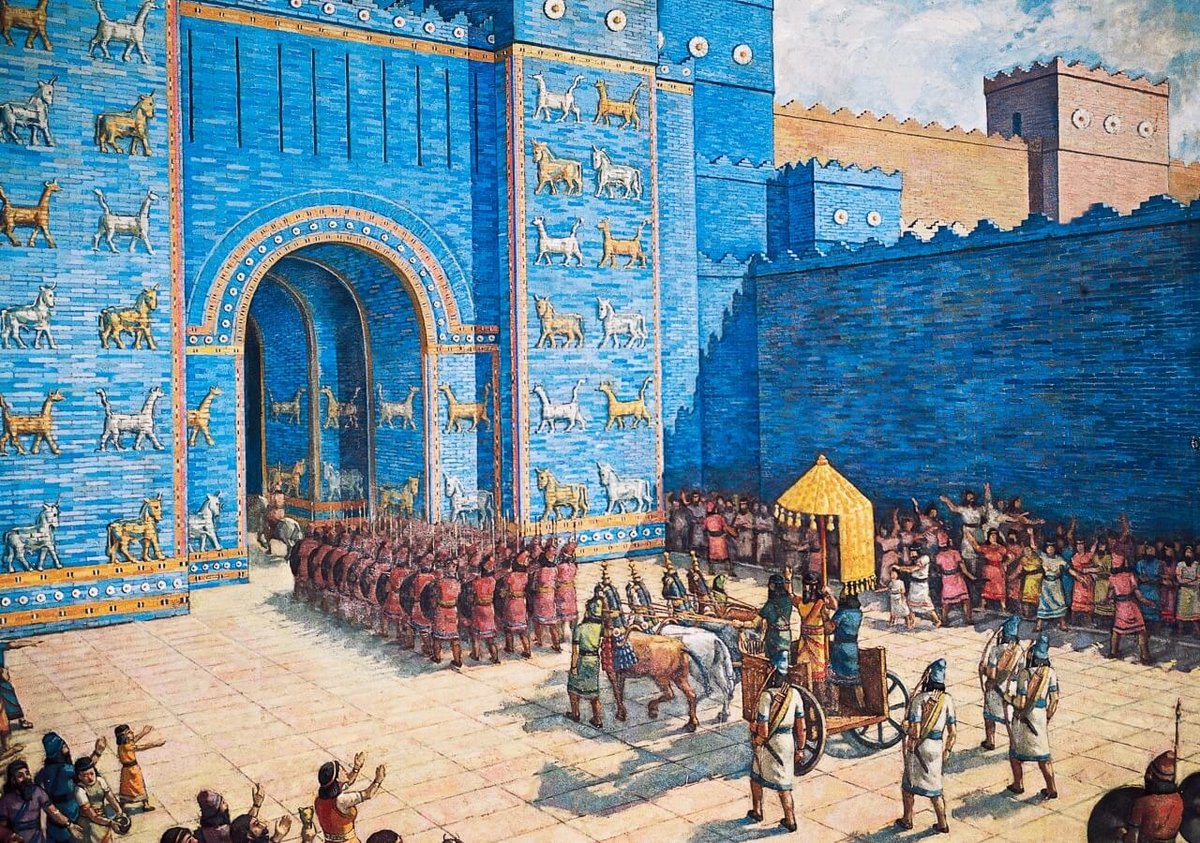
Mesopotamian artists and writers produced works of enduring beauty and philosophical depth. Their artistic output included intricate sculptures, detailed reliefs, and decorative arts, often depicting religious themes, mythological scenes, and aspects of daily life, all showcasing advanced craftsmanship. From the majestic Ishtar Gate of Babylon to the Standard of Ur, these visual records offered insights into their cosmology, power structures, and daily customs.
Their literary contributions are equally significant. Epic poetry, religious texts, and complex mythologies poured forth from the scribal schools. The Epic of Gilgamesh stands as the most renowned literary masterpiece. This ancient tale, predating Homer's epics by millennia, explores universal themes: heroism, friendship, loss, the search for immortality, and the ultimate acceptance of human mortality. It is a powerful narrative that continues to resonate, demonstrating humanity's earliest grappling with profound existential questions. Mesopotamian mythology, with its creation stories, flood narratives, and intricate pantheon, also offered explanations for natural phenomena and divine justice, influencing later religious narratives, including those found in ancient Hebrew texts.
Life in the First Cities: A Hierarchical Society
Mesopotamian society was highly organized and distinctly hierarchical. At the apex were the ruling elites—kings and priests—who wielded significant political and religious power. Beneath them were powerful elites like scribes (who held immense social standing due to their literacy), merchants, and wealthy landowners.
The backbone of society consisted of commoners: farmers who tilled the fertile lands, artisans who crafted goods, and laborers who built cities and infrastructure. Below them, often through debt or conquest, were slaves, who were part of the social hierarchy and had varying degrees of rights depending on the specific period and legal code. Daily life, for most, revolved around agriculture, with social distinctions profoundly affecting access to resources, justice, and participation in public life. This structured society, with its divisions of labor and formalized roles, was a hallmark of complex urban living.
Echoes Through Time: Mesopotamia's Enduring Relevance
The influence of Mesopotamian civilizations extends far beyond the dusty archaeological sites. Their innovations didn't just end with the fall of their empires; they were absorbed, adapted, and built upon by subsequent civilizations, creating an unbroken chain of human progress.
- Foundation for Governance: Their pioneering work in writing, law, and administration laid the essential groundwork for complex governance systems. The ideas of codified laws, centralized bureaucracy, and the role of the state in maintaining order were picked up by the Persians, Greeks, and Romans, directly informing modern legal systems and concepts of justice and public administration.
- Scientific and Mathematical Heritage: Mesopotamian advancements in science, engineering, and mathematics established foundational knowledge that influenced Greek scholars and later European scientific thought. Our way of telling time and measuring angles directly descends from their sexagesimal system. Their detailed astronomical observations provided a starting point for the study of the cosmos.
- Cultural and Literary Inspiration: Culturally, Mesopotamian mythology, literature, and art influenced later religious practices and literary traditions across the Near East and beyond. The Epic of Gilgamesh's themes reappear in countless stories. The architectural grandeur of structures like the Hanging Gardens of Babylon and the Ishtar Gate, even in their ruins or reconstructions, continue to inspire awe and illustrate the heights of early human achievement.
- Understanding Human Development: The study of Mesopotamia continues to provide invaluable insights into the very origins of human civilization. It helps us understand the rise of complex societies, the evolution of cultural practices, and the profound impact of innovation on human destiny. Archaeological research constantly uncovers new layers of understanding, while ancient texts, preserved on clay tablets, continue to speak to us across millennia, offering a direct window into the thoughts, fears, and triumphs of our distant ancestors.
From the minutes ticking on your clock to the legal code that governs your society, the ancient voices of Mesopotamia continue to whisper in the fabric of our modern world. Their legacy is not just history; it is the enduring foundation upon which much of human civilization has been built. The insights gained from studying these ancient peoples are not just academic; they are a vital key to understanding our shared past and appreciating the long, intricate journey of human progress.