Step into a world where rivers were gods, mountains housed demons, and the very act of creation was a cosmic battle. Mesopotamian mythology and religion, the world's oldest recorded mythological tradition, isn't just a collection of ancient stories; it's the heartbeat of civilizations that shaped everything from our understanding of nature to the foundations of kingship, morality, and even the human condition. These tales, etched into clay millennia ago, were more than just entertainment—they were the operating system for an entire society, deeply influencing cultures from the Hurrians to the Israelites, and leaving an indelible mark on the shared human narrative.
Far from dusty academic texts, these myths are vibrant chronicles of struggle, wisdom, and the enduring quest for meaning. They invite us to explore the core values of the people who first imagined cities, codified laws, and charted the stars.
At a Glance: Key Takeaways from Mesopotamian Mythology
- Ancient Roots: Originating between the Tigris and Euphrates rivers around 3100 BCE, these are the oldest recorded myths.
- Cultural Blueprint: Myths weren't separate from daily life; they informed kingship, law, agriculture, healing, and even personal names.
- Cosmic Order: The universe was envisioned in three layers: heaven, earth, and the underworld, governed by a complex pantheon.
- Powerful Deities: Gods like Anu (sky), Enlil (air/destiny), Enki (wisdom/water), and Ishtar (love/war) formed a divine bureaucracy.
- The Enuma Elish: This Babylonian creation epic details a cosmic struggle, Marduk's triumph, and the creation of humanity to serve the gods.
- Enduring Legacy: Themes like the Great Flood and the hero's journey from Mesopotamian myths predate similar stories in many later cultures, including the Bible.
- Visible Faith: Ziggurats, relief carvings, and guardian figures like Lamassu visibly expressed religious beliefs.
- Scribes as Custodians: Oral traditions were meticulously preserved in cuneiform on clay tablets by scribes, ensuring their survival.
The Cradle of Stories: Where it All Began
Imagine a land perpetually reshaped by two mighty rivers, the Tigris and the Euphrates. This fertile crescent, known as Mesopotamia, was not only the birthplace of agriculture and writing but also the crucible for humanity's earliest complex belief systems. From around 3100 BCE, the Sumerians, the earliest known civilization in this region, began to articulate their understanding of the world, painstakingly recording it in cuneiform script. Their city-states—Ur, Uruk, Eridu—were not just political entities; they were sacred spaces dedicated to powerful deities like Enlil, Enki, and Inanna.
As empires rose and fell, so too did the interpretations and emphases within this rich mythological tapestry. The Akkadians adapted Sumerian myths, integrating their own linguistic and cultural nuances. Later, the Babylonians, under powerful rulers, cemented their dominance by elevating their city god, Marduk, to the head of the pantheon. This era gave us the magnificent Enuma Elish, a seven-tablet creation epic that wasn't just a story, but a profound national theology justifying Marduk's supremacy and Babylon's authority. The Assyrians, masters of military might, similarly transformed their god Ashur into a symbol of conquest and empire, reinforcing their imperial ambitions through divine mandate. This dynamic evolution of religious thought, often intertwined with political power, continued until the region fell to Alexander the Great in 331 BCE.
Mapping the Cosmos: A Universe of Gods and Destiny
For the Mesopotamians, the universe was an ordered, albeit often unpredictable, place. They envisioned it in three distinct layers: the heavens, the dwelling place of the great sky god Anu; the earth, where humanity toiled and thrived; and the chilling underworld, known as Kur, ruled by the formidable goddess Ereshkigal.
The sky itself wasn't an endless expanse but a solid dome of stone, above which lay the fresh, sweet-water ocean called Apsu—a primordial entity with immense significance. Beneath the earth, Apsu also flowed, linking the upper and lower realms. Mountains were not merely geological features; they were revered as the realms of gods and dangerous demons, while the life-giving rivers, the Euphrates and Tigris, were understood as divine gifts, essential for survival. This deep connection between landscape and deity illustrates how intimately these people perceived their world as imbued with sacred meaning.
With an unparalleled dedication to observation, Mesopotamians meticulously charted the stars. This wasn't just idle curiosity; it was a practical and spiritual endeavor. They used celestial patterns to predict omens, anticipate the crucial annual floods, and guide critical agricultural decisions. For them, astronomy and astrology were two sides of the same coin, reflecting a universe where the movements of the heavens directly impacted earthly affairs. To delve deeper into the historical context and other fascinating aspects of this region, you might want to learn more about Tigrismese.
Meet the Pantheon: A Divine Bureaucracy with Human Drama
The Mesopotamian pantheon was less a random assortment of deities and more a vast, celestial bureaucracy. Each god held a specific domain, duties, and often a complex personality, reflecting the multifaceted challenges and aspirations of humanity.
At the very top, residing in the heavens, was Anu, the sky god. His primary role was to bestow kingship, making earthly rulers legitimate through divine decree. While powerful, Anu often remained somewhat aloof, delegating active governance to his formidable children.
His son, Enlil, was the god of air, wind, storms, and destiny. Enlil wielded immense power, capable of bestowing blessings but equally prone to unleashing devastating natural disasters as punishment for humanity's perceived transgressions. His decisions were often final, shaping the fate of both mortals and other gods.
Then there was Enki, god of freshwater (especially the sweet waters of Apsu), wisdom, magic, and craftsmanship. Enki was known as a trickster, often circumventing the harsher decrees of his brother Enlil to protect humanity. He was the divine problem-solver, the one appealed to when ingenuity and cunning were needed.
Perhaps the most dynamic and complex goddess was Ishtar (known as Inanna to the Sumerians). She embodied striking duality: goddess of both passionate love and brutal war, fertility and destruction, political power and personal desire. Her famous descent into the underworld—a journey to rescue her beloved or assert her dominance—forms an early and powerful motif of death and resurrection, showcasing transformation and immense agency.
Other vital gods included Shamash, the radiant sun god, who illuminated the world and, more importantly, served as the god of justice. He was often depicted with a saw-toothed dagger, ready to cut through deceit. Finally, Ninhursag, the earth mother goddess, oversaw birth and mountains, embodying the nurturing and protective aspects of the natural world. This intricate web of divine personalities and powers provided the framework for understanding life's blessings and adversities.
The Epic of Creation: How Marduk Shaped the World (and Humanity)
No exploration of Mesopotamian mythology is complete without understanding the Enuma Elish, the Babylonian creation epic. This seven-tablet masterpiece isn't just a story of beginnings; it's a profound theological statement, justifying the ascendancy of Marduk and the city of Babylon.
The epic opens in a primordial state of watery chaos, with two immense, ancient deities: Apsu, the sweet freshwater ocean, and Tiamat, the saltwater chaos monster. From their union, the first generation of younger gods emerges. These boisterous, energetic new gods disturb Apsu's peace, leading him to plan their destruction. Enki, ever the clever one, thwarts Apsu's plot by casting a sleeping spell and then slaying him, building his dwelling upon Apsu's corpse.
Tiamat, enraged by the death of her consort, seeks vengeance. She creates an army of terrifying monsters—scorpion-men, dragon-hybrids, and more—and elevates her new consort, Kingu, to lead them, entrusting him with the Tablets of Destiny, symbols of ultimate authority. The younger gods are terrified and powerless against her might. It is then that Marduk, a relatively younger god known for his strength and strategic mind, steps forward. He demands absolute authority over the gods in exchange for defeating Tiamat.
In a dramatic cosmic battle, Marduk confronts Tiamat. He binds the winds, shoots an arrow into her gaping mouth, and slays her. He then splits her monstrous body in two: one half he uses to form the heavens, the other the earth. From Tiamat’s tears flow the Tigris and Euphrates rivers, and from her creatures, the constellations. Kingu, her general, is also slain. From Kingu’s blood, mixed with earth, humanity is created.
The purpose of humanity, as explicitly stated in the Enuma Elish, is to serve the gods. Mortals were created to perform the arduous tasks of cultivation, building temples, and offering sacrifices, freeing the gods from such labor. This narrative fundamentally justified human subservience and emphasized the crucial role of ritual and worship in maintaining cosmic order.
Faith in the Everyday: Mythology's Role in Daily Life
For the Mesopotamians, mythology wasn't relegated to grand temples or festivals; it was woven into the very fabric of daily existence. These stories provided frameworks for understanding the world, guiding decisions, and offering comfort in an often-harsh environment.
Consider a farmer tilling his fields: his prayers for a bountiful harvest would be directed to gods like Enlil for rain or Ninhursag for fertile soil. An artisan crafting pottery or a scribe painstakingly copying texts would invoke specific deities, such as Enki for wisdom or Nisaba (goddess of writing), to guide their hands. Even legal decisions, like those outlined in the Code of Hammurabi, drew authority from divine principles, often depicting Shamash, the god of justice, bestowing the law upon the king. The act of naming a child could invoke a god's protection or blessing, linking the individual directly to the divine realm.
Within every household, small altars were common, serving as focal points for daily veneration. Amulets and protective charms were ubiquitous, worn by adults and children alike to ward off misfortune or invoke good luck. The line between magic and religion was virtually nonexistent. Priests and exorcists played vital roles, interpreting omens from animal livers or dreams, advising rulers and common folk alike. Diseases were rarely seen as purely physical ailments; they were often understood as spiritual intrusions, curses, or the work of malevolent demons. Healing, therefore, involved not only herbal remedies but also elaborate ritual purification, incantations, and appeals to specific gods or protective spirits.
Demons were very real forces in the Mesopotamian imagination. Figures like Lamashtu, a terrifying demoness who threatened pregnant women and infants, haunted their fears. Against her, protective demons like Pazuzu, with his grotesque but benevolent visage, were invoked. These forces were combatted with intricate protective spells inscribed on clay tablets or cast as figurines, placed in homes to safeguard families.
Powerful Portrayals: The Agency of Mesopotamian Goddesses
While often perceived as a patriarchal society, Mesopotamian mythology provides compelling evidence of women holding powerful and dynamic roles within the divine sphere. Goddesses like Ishtar (Inanna), Ninhursag, and Nisaba (the goddess of writing, wisdom, and grain) were not just supporting characters; they were creators, warriors, enforcers of justice, and wielders of immense political and cosmic power.
Inanna's myths, in particular, offer a rich exploration of gender duality, transformation, and individual agency. Her journey to the underworld, for instance, challenges conventional boundaries of life and death, masculine and feminine, power and vulnerability. She navigates treacherous realms, transforms, and ultimately reclaims her authority, often acting as a bridge between worlds, embodying complex strengths that defied simple categorization. These goddesses provided strong archetypes for women in society, suggesting that power and influence were not solely the domain of masculine deities.
Echoes in Stone and Clay: How Myths Endured
The stories of Mesopotamia weren't just spoken; they were etched into the very landscape and culture. Art and architecture served as powerful expressions of their mythological and religious beliefs, making the unseen world visible.
Ziggurats, those massive, stepped temple towers, dominate the archaeological record. These towering structures, often described as man-made mountains, were believed to connect heaven and earth, serving as sacred platforms where priests could commune with the gods. Their sheer scale symbolized humanity's reverence and effort to reach the divine.
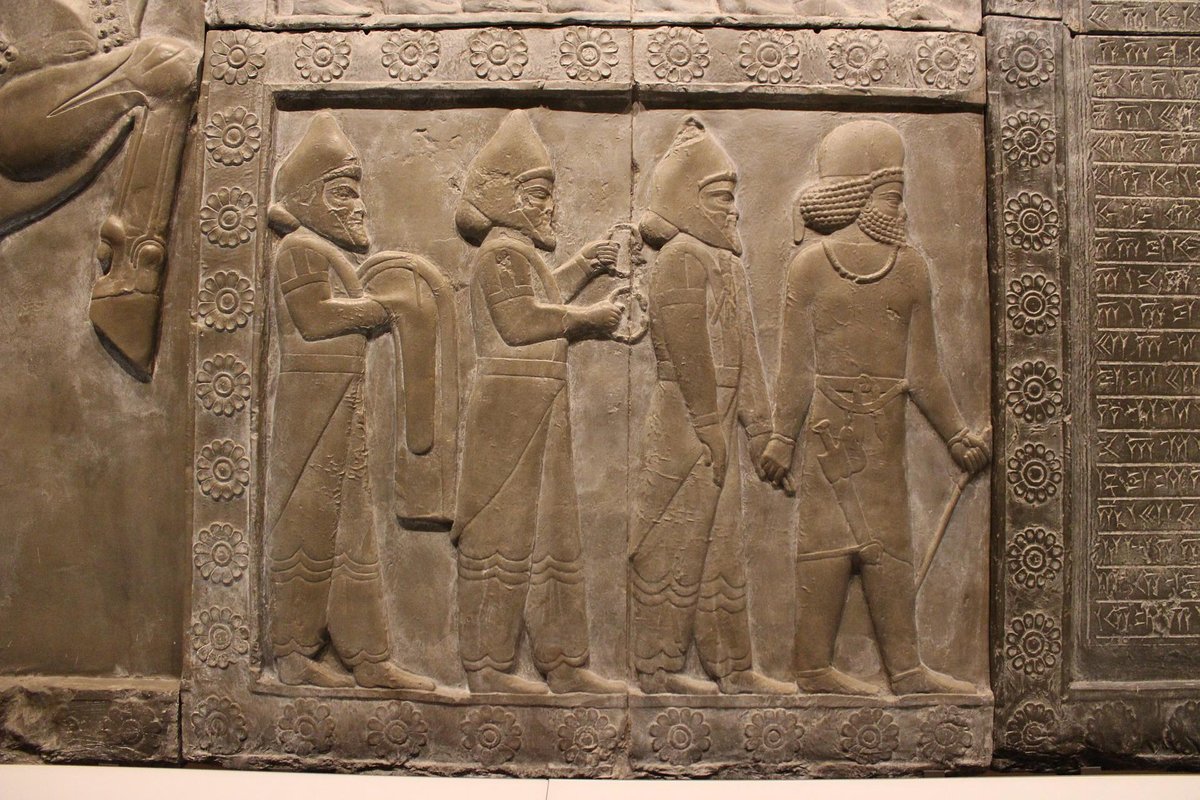
Beyond architecture, countless smaller artifacts tell tales. Elaborate relief carvings adorned palace walls, depicting divine battles, heroic deeds, and mythical beasts—powerful visual narratives reinforcing cultural identity and divine favor. Cylinder seals, tiny but intricately carved stone cylinders, were rolled onto wet clay to create a unique impression. These served as signatures but often featured miniature mythical scenes, divine patrons, or protective symbols, integrating sacred imagery into everyday transactions and documents. Statuary, from massive divine figures to smaller votive offerings, brought the gods into tangible form. Guardians like the majestic Lamassu—winged human-faced bulls or lions—stood watch at palace gates, their formidable presence embodying divine protection against malevolent forces.
Crucially, the preservation and spread of these myths were largely due to the development of cuneiform writing. What began as oral traditions, passed down through generations, were meticulously recorded on clay tablets. Scribes, highly educated and respected members of society, played a pivotal role. They copied and recopied these tales in specialized scribal schools, ensuring their survival. Grand libraries, like King Ashurbanipal's (668–627 BCE) at Nineveh, housed tens of thousands of these tablets, safeguarding centuries of accumulated wisdom and storytelling.
Sumerian Literary Roots: Beyond Epic Battles
Long before the Babylonian Enuma Elish, Sumerian literature, dating from the mid-4th millennium BCE, laid the groundwork for sophisticated storytelling. Originating with a logographic writing system, these early texts reveal a rich literary tradition that explored more than just epic battles.
Core genres included hymns, myths, and epics, often panegyric in nature. These pieces weren't just descriptive; they were designed to activate virtues, to praise gods and kings, and to inspire specific actions or feelings within the community. Alongside these grand narratives, there were laments—poignant compositions seeking to recall lost blessings, whether for individuals mourning personal loss or for entire cities devastated by war or natural disaster. Later, around the 19th century BCE, a new genre emerged: penitential psalms. These focused less on communal catastrophe and more on private misfortune, revealing a shift towards individual spiritual introspection and a slightly diminished emphasis on purely magical solutions. These diverse forms of literature show the evolving complexity of Mesopotamian thought, moving from grand cosmic narratives to more personal expressions of faith and suffering.
A Timeless Legacy: Mesopotamia's Enduring Influence
The echoes of Mesopotamian mythology resonate far beyond the ancient Near East, proving its foundational role in the tapestry of human civilization and storytelling. Themes, motifs, and narrative structures first articulated in the land between the rivers can be found in cultures thousands of miles away and millennia later.
Perhaps one of the most striking examples is the great flood narrative. The Epic of Gilgamesh, arguably the most famous Mesopotamian myth, features the story of Utnapishtim, a man chosen by the gods to build an ark and save humanity and animals from a devastating deluge. This tale clearly predates the biblical Noah story, demonstrating a shared deep-seated human memory or cultural transmission of a catastrophic flood event, reshaping our understanding of religious textual origins.
Beyond the flood, countless other elements appear: the very structure of heaven and hell, divine councils debating human fate, rebellious gods challenging authority, trickster deities who both cause mischief and provide aid, and the archetypal hero's journey (as epitomized by Gilgamesh's quest for immortality). These concepts and narrative devices echo profoundly in Egyptian and Greek myths, influencing their pantheons and epic poems. More broadly, they form the very roots of shared humanity and storytelling, providing a blueprint for narratives that continue to captivate us today. The foundational ideas of good vs. evil, cosmic order vs. chaos, and humanity's place in a divine plan find their earliest, most explicit expressions here.
Unearthing the Past: Key Archaeological Discoveries
Our understanding of Mesopotamian mythology and religion isn't built on speculation; it's grounded in a wealth of extraordinary archaeological evidence. These discoveries provide tangible links to the beliefs of ancient peoples.
Thousands of cuneiform texts, unearthed from sites like Nippur, Ur, Ashur, Sultantepe, and Nineveh (the location of Ashurbanipal's famous library), have allowed scholars to reconstruct myths, hymns, prayers, and rituals. These tablets are our direct window into their worldview.
Massive temples and ziggurats, excavated at sites such as Eridu, Babylon, and Kalakh, reveal the physical spaces where religious life unfolded. These structures were not just buildings; they were sacred landscapes, meticulously oriented and adorned to honor specific deities.
Significant artifacts further enrich our understanding. The Uruk Vase, dating to Sumerian times, depicts a ritual procession honoring Inanna, offering a rare glimpse into cultic practices. The Naram-Sin Stela commemorates the Akkadian king's victory under divine favor, showcasing royal ideology intertwined with religious belief. The Ur-Nammu Stela portrays the king receiving divine blessings and instructions, reinforcing the concept of divinely sanctioned kingship. And perhaps most famously, the Code of Hammurabi Stela depicts the sun god Shamash bestowing laws upon the Babylonian king, serving as a powerful visual testament to the divine origin of justice. These artifacts provide not only rich religious iconography but also crucial context for understanding the practical application of mythological concepts in Mesopotamian society.
Connecting with Ancient Wisdom Today
As you reflect on Mesopotamian mythology and religion, it becomes clear that these weren't just stories confined to a distant past. They were sophisticated attempts to understand a complex world, grapple with existential questions, and establish social order. The Mesopotamians, through their deities, their epics, and their daily rituals, grappled with themes of creation, justice, power, and the human desire for meaning—concerns that remain remarkably relevant today.
By exploring their myths, you gain not just historical knowledge, but a deeper appreciation for the ancient roots of human thought and storytelling. These narratives offer profound insights into the foundational values of the civilizations that gave us writing, law, and monumental architecture. They remind us that the human spirit's quest to understand its place in the cosmos is a journey as old as civilization itself, one that continues to shape our shared global heritage.