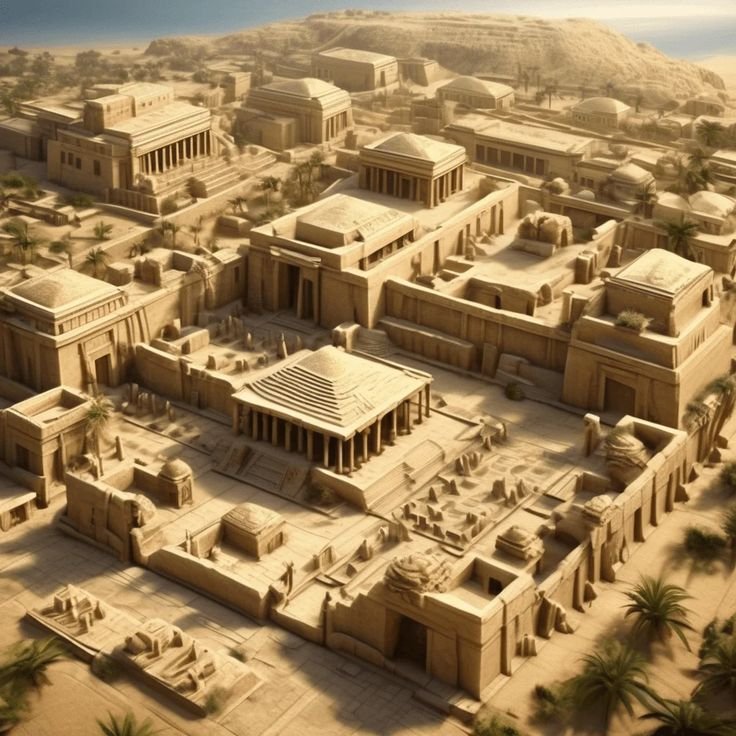
The modern world, with its complex legal systems, advanced mathematics, and fundamental technologies, often feels like the product of continuous, linear progress. Yet, much of what we take for granted today traces its roots back to a truly groundbreaking era: the age of Sumerian Civilization and Innovations. Picture a civilization that, over 6,000 years ago, laid the very groundwork for urban living, organized religion, and even the way we tell time. This wasn't just ancient history; it was the blueprint for human civilization itself, a testament to ingenuity in a harsh but fertile land.
At a Glance: Why Sumer Matters Today
Before we dive deep, here’s a quick overview of why Sumerian civilization remains so profoundly relevant:
- First Writing System: Cuneiform gave us the ability to record history, laws, and knowledge.
- The Wheel: Revolutionized transportation, trade, and even pottery.
- The Plow: Transformed agriculture, securing stable food for growing populations.
- Irrigation Systems: Enabled large-scale farming in arid regions, leading to prosperity.
- Base-60 Math: Influences our timekeeping (60 seconds, 60 minutes) and circles (360 degrees).
- Early Laws & Governance: The Code of Ur-Nammu and the concept of monarchy set precedents for societal structure.
- Astronomy: Pioneered star mapping and the lunar calendar.
- Metallurgy: Ushered in the Copper Age, transforming tools and warfare.
The Cradle of Civilization: Where and When It All Began
Imagine a lush crescent of land nestled between two mighty rivers, the Tigris and the Euphrates. This was southern Mesopotamia, a region so fertile it earned the moniker "the Land Between the Rivers." It was here, around 5,500 BCE, that the Sumerians, believed to be the first major group to migrate to this area, began to forge something entirely new: civilization.
Their civilization flourished from roughly 4500 to 1900 BCE, evolving into a collection of powerful city-states. Each was its own independent entity, ruled by its own king, yet all shared a common language, cultural practices, and a pantheon of gods. The Sumerians, who referred to themselves as 'The Land of Black-Headed People,' essentially wrote the manual for living together in large, organized communities. To truly grasp the breadth of their influence, it helps to understand the unique geographical advantages and challenges of this region. For more context on the historical backdrop of this pivotal region, you might want to explore more about Tigrismese.
Sumer's Greatest Legacy: The Birth of Written Language
Of all the profound Sumerian Civilization and Innovations, none quite compares to the invention of cuneiform, the world's first true writing system. Dating back to between 3500 and 3000 BCE, this wasn't just a way to scribble notes; it was a fundamental shift in how humans could store, transmit, and build upon knowledge.
Initially, cuneiform involved using a reed stylus to cut pictorials and abstract figures into soft clay tablets. Think of it as a series of wedge-shaped marks, which is what "cuneiform" actually means (from the Latin cuneus, meaning "wedge"). Over time, the script became more sophisticated and abstract, reducing its complex characters from over a thousand to a more manageable six hundred. This innovation wasn't proprietary; its undeniable utility led to its adoption by subsequent powerful civilizations like the Babylonians, Assyrians, and Akkadians, becoming the lingua franca of the ancient Near East for centuries. Without cuneiform, complex administration, detailed historical records, and the dissemination of literature would have been impossible. It essentially turned fleeting spoken words into enduring, tangible data.
Engineering a Revolution: Sumerian Innovations That Built a World
The Sumerians were pragmatic problem-solvers, driven by the demands of their environment and the needs of their growing city-states. Their technological breakthroughs weren't just clever ideas; they were essential tools that allowed society to scale, thrive, and sustain itself.
The Power of Water: Irrigation and Drainage
Living in the "land between the rivers" might sound idyllic, but the Tigris and Euphrates were prone to unpredictable flooding and left vast tracts of land dry. The Sumerians tackled this challenge head-on by becoming master hydrologists. They engineered sophisticated irrigation systems, digging intricate networks of canals that diverted river water to parched fields, drastically increasing arable land and agricultural productivity.
But they didn't stop there. They also developed drainage systems, employing simple yet effective methods like buckets and strategically placed levee holes to manage water flow and prevent salinization of the soil—a common problem in irrigated lands. These innovations weren't just about farming; they represented a massive collective effort, requiring advanced planning, organized labor, and a shared understanding of engineering principles.
Rolling Forward: The Wheel's Transformative Impact
It's easy to take the wheel for granted today, but its invention in Mesopotamia around 3500 BCE was a game-changer of monumental proportions. Early wheels evolved from simple cut logs used as rollers to true wheels attached to axles. This wasn't just a toy; it was a fundamental technology that revolutionized transportation.
Suddenly, heavy goods could be moved with far greater ease, facilitating trade over longer distances and speeding up the construction of monumental structures like the ziggurats. The wheel also transformed pottery, allowing for the creation of more uniform and refined vessels, a crucial step in the development of ceramics. Imagine the immediate impact: goods moved faster, people traveled further, and the economy began to hum with newfound efficiency.
Feeding the Masses: The Plow and Agricultural Abundance
Before the plow, farmers scratched the earth with animal horns or sticks, a slow and arduous process. The Sumerians, recognizing the need for greater efficiency to feed their burgeoning urban populations, innovated the plow. This simple yet ingenious tool, drawn by oxen, allowed for deeper and more consistent tilling of the soil.
The result? A massive increase in agricultural productivity. Stable food supplies meant that more people could move into cities, freeing them from direct farm labor to specialize in crafts, administration, or religious duties. The plow was instrumental in transforming subsistence farming into an engine of societal wealth and growth.
Navigating New Horizons: The Sailboat
While their rivers provided internal transportation, the Sumerians were also keen on expanding trade with distant lands. Their invention of the sailboat enabled them to navigate larger bodies of water, opening up new trade routes across the Persian Gulf and beyond. This wasn't just about moving goods; it was about the exchange of ideas, technologies, and cultures, broadening the Sumerian world far beyond the confines of Mesopotamia. Early sailboats, though rudimentary, represented a bold step in harnessing natural forces for human endeavor.
The Architects of Knowledge: Mathematics, Astronomy, and Governance
Beyond physical tools, the Sumerians also innovated in abstract thought, developing systems of knowledge that underpinned their complex society and influenced cultures for millennia.
Numbers That Shaped the World: Sexagesimal System and Practical Math
The Sumerian numbering system was truly unique: a sexagesimal (base 60) system. Unlike our decimal (base 10) system, base 60 allowed for easy division by a greater number of factors (2, 3, 4, 5, 6, 10, 12, 15, 20, 30). This wasn't an academic exercise; it was profoundly practical.
This advanced mathematical understanding was crucial for:
- Trade: Accurate calculations for exchanges and inventory.
- Taxation: Fair and consistent assessment of goods and labor.
- Civil Engineering: Precise measurements for canals, buildings, and city planning.
- Astronomy: Complex computations for tracking celestial movements.
It’s astonishing to realize that our modern world still echoes with Sumerian mathematics. The division of an hour into 60 minutes, a minute into 60 seconds, and a circle into 360 degrees—these are direct legacies of the Sumerian sexagesimal system.
Mapping the Heavens: Pioneers of Astronomy
The clear Mesopotamian nights offered a spectacular view of the cosmos, and the Sumerians were among the first to systematically study the stars. They grouped stars into constellations, many of which still bear names derived from their ancient observations. They also identified the five planets visible to the naked eye (Mercury, Venus, Mars, Jupiter, and Saturn).
Building on their astronomical insights, they created the first lunar calendar. This calendar had a 12-hour day (measured from sunset to sunset), a 12-month year of 360 days, and, remarkably, included an extra month every four years to realign with the solar year—an ancient equivalent of our leap year. This precise timekeeping was vital not only for religious festivals but also for coordinating agricultural cycles and understanding seasonal changes.
Ruling the Realm: The Invention of Monarchy and Law
As city-states grew in size and complexity, so did the need for stable governance. The Sumerians invented the concept of monarchy, with kings holding what was believed to be divine right, often serving simultaneously as high priests. This centralized authority was an important step towards governing large, diverse populations, moving beyond tribal structures to a more sophisticated political system.
Central to each city-state was the ziggurat, a massive mud-brick pyramidal structure that served as both a religious temple and an administrative hub. These towering structures symbolized the connection between heaven and earth and the king's role as an intermediary.
But kingship needed rules. Perhaps the most profound Sumerian Civilization and Innovations in governance was the development of codified law. The Code of Ur-Nammu, discovered in Nippur, stands as the oldest known law code, predating the more famous Code of Hammurabi by three centuries. Preserved on clay tablets, it prescribed retributive justice, laying out clear punishments for specific offenses:
- Death for murderers and robbers.
- Imprisonment and a 15-shekel silver fine for kidnapping.
- A 1-mina silver fine for men divorcing their first wife.
- Death for men who slept with another man's virgin wife.
This legal framework provided a foundation for order, discouraging crime and establishing precedents for justice that would inspire later civilizations, including our own.
Crafting Tomorrow: Metallurgy and Material Culture
The Sumerians also pioneered the use of metals, marking the beginning of the Chalcolithic (Copper) period. They were the first to fabricate copper, a breakthrough that profoundly impacted their material culture and technological capabilities.
Mastering Metal: The Copper Age Begins
The ability to extract, smelt, and shape copper opened up a world of possibilities. Copper was far more durable and versatile than stone or bone, leading to a proliferation of new tools and weapons:
- Tools: Chisels, razors, harpoons, and more efficient agricultural implements.
- Vessels: Jugs and containers that were lighter and more robust.
- Weapons: Spears, swords, maces, slings, and clubs, giving their armies a significant advantage.
This mastery of metallurgy wasn't just about creating better implements; it signaled a sophisticated understanding of material science and manufacturing processes, paving the way for the eventual Bronze Age.
Leisure & Legacy: Even Play Had a Purpose
Even in their leisure time, Sumerians were innovators. Amidst the serious business of building cities and crafting laws, they invented the world’s first known board game.
The Royal Game of Ur: Ancient Entertainment
Between 2600 and 2400 BCE, the Royal Game of Ur emerged, a sophisticated racing game played with dice on an ornate board. Excavated from royal tombs, these game boards suggest that even ancient entertainment held cultural significance, perhaps even mystical or symbolic meaning. While the exact rules are still debated by scholars, it represents humanity's innate desire for structured play and mental engagement, a tradition that continues to this day.
Beyond the Ruins: The Enduring Echoes of Sumer
The Sumerian civilization eventually declined, giving way to other powers in Mesopotamia, but its legacy is indelibly etched into the fabric of human history. Their Sumerian Civilization and Innovations were not isolated curiosities; they were foundational.
The invention of writing, the plow, and the wheel directly enabled the sustenance of large populations and the accumulation of wealth, forming the bedrock of complex societies. The concept of monarchy and the Code of Ur-Nammu were crucial steps towards complex government and legal frameworks, influencing subsequent empires and the very notion of justice. Their advancements in metallurgy, mathematics, and astronomy laid crucial scientific foundations upon which later civilizations, from the Greeks to the Arabs, would build.
When you glance at a clock, check your calendar, or even navigate using sophisticated mapping software, you are, in a very real sense, interacting with the echoes of Sumerian ingenuity. They weren't just an ancient people; they were the pioneers who, against all odds, charted the course for much of what we call civilization today. Understanding their contributions isn't just a trip down memory lane; it's a vital recognition of the persistent human spirit to innovate, organize, and build a better world.
Your Next Read
The story of Sumer is a testament to the power of early human ingenuity. It reminds us that our most fundamental systems—from language to law—had to be invented by someone, somewhere. As you continue to explore the rich tapestry of ancient history, remember that the seeds of much of our modern world were sown in the fertile crescent, among the black-headed people of Sumer.